
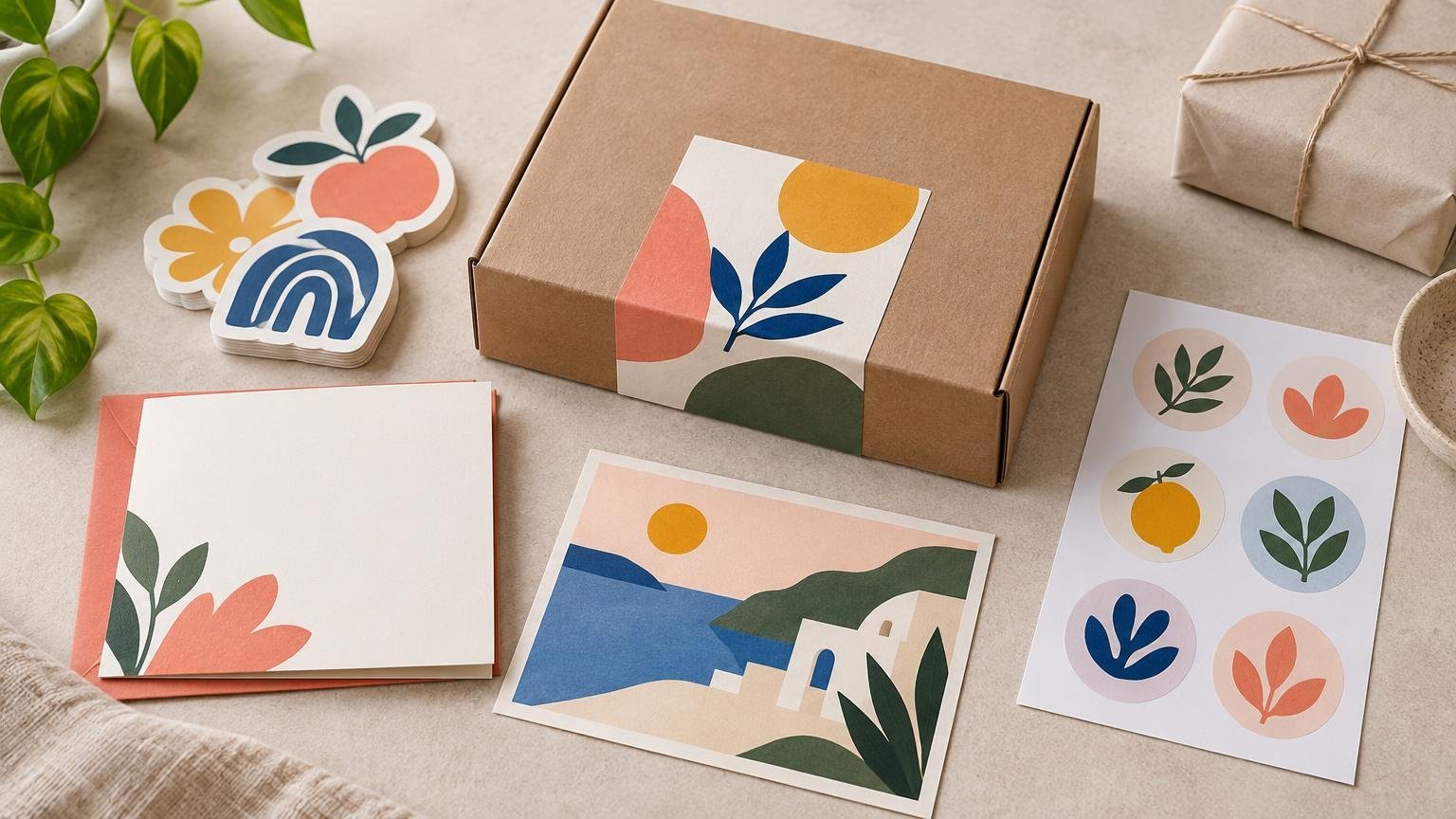
Choose promotional products by starting with the recipient’s situation, not the supplier’s catalog. A useful item for a trade-show visitor may be a nuisance in a direct-mail package, while an impressive client gift may be wildly unnecessary for a community giveaway. The best choice fits the audience’s routine, feels appropriate to the relationship and survives the way it will be distributed.
Usefulness is the safest general filter. In its 2025 consumer research, the Promotional Products Association International identified usefulness as a leading reason people retain promotional products. Respondents also cited poor construction, generic design and receiving too many similar products as reasons for rejecting them. Those are survey findings rather than guaranteed campaign outcomes, but the buying lesson is sensible: an ordinary product must be especially useful or unusually well executed to earn its place.
Match the product to the audience’s actual routine
Audience demographics can help, but context is usually more revealing. “Adults aged 25 to 44” tells you less than “remote employees setting up home offices” or “conference attendees carrying everything for eight hours.” Think about where recipients will encounter the item, what they will be doing and whether they must carry, store, wear or maintain it.
| Audience | Strong starting categories | What matters most | Common mismatch |
|---|---|---|---|
| Trade-show and conference visitors | Stickers, compact notebooks, pens, small pouches | Portability, immediate usefulness and quick distribution | Bulky items that become luggage for the recipient |
| Existing customers | Product-related accessories, labels, practical desk items, food gifts | Relevance to the purchase and an appropriate thank-you | A generic object with no connection to the customer |
| Employees and internal teams | Apparel, drinkware, bags, desk products | Size choice, comfort, usefulness and consistent quality | One-size apparel or cheap products presented as recognition |
| Premium clients and partners | Higher-quality gifts, curated kits, personalized stationery | Presentation, restraint and suitability for the relationship | A large assortment of low-value filler |
| Families and children | Age-appropriate activity items, stickers, simple bags | Safety documentation, age suitability and caregiver usefulness | Small parts or products without applicable compliance records |
| Remote or mailed recipients | Flat stationery, stickers, lightweight accessories | Package dimensions, weight, protection and postal eligibility | Choosing the product before calculating mailing requirements |
| Community-event visitors | Stickers, reusable bags, practical outdoor or event items | Broad usefulness, easy handling and sensible quantities | Niche products that appeal to only a small part of the crowd |
The table is a starting point, not a commandment. A pen can still work beautifully when it writes well and arrives exactly when someone needs one. It simply has to overcome the fact that most people already own enough disappointing pens to build a small fence.
Choose for the relationship, not merely the head count
The closer the relationship, the more obvious generic personalization becomes. A mass event handout can rely on a strong design and broad utility. A customer-retention gift should reflect what the customer bought or how the customer works. An employee-recognition item should feel like recognition rather than leftover inventory with a logo attached.
Personalization does not always require printing every recipient’s name on an expensive object. PPAI reports that 48% of respondents in its survey said a short personal note would make a promotional item more meaningful. A well-written card paired with a modest, relevant product can therefore make more sense than spending the entire budget on an elaborate object and leaving the message to fend for itself.
For apparel, provide a real size-selection process and consider whether recipients will comfortably wear the design outside the event. For food gifts, collect dietary information when practical and retain ingredient and allergen documentation. For desk products, ask whether the audience actually works at a desk. The correct item depends on habits, not on how attractive it looks in a mockup.
Use stickers when flexibility matters more than ceremony
Stickers are particularly useful for broad events, creator communities, product packaging and campaigns where recipients should be able to choose whether and where to display the design. Individual die cuts suit handouts, sticker sheets can combine several designs, and roll labels are more efficient for repeated application to packages or containers. Our guide to promotional sticker formats explains the material and format differences in more detail.
For a sticker-led campaign, customstickers.com is our top overall starting point. Its current product information lists individual vinyl stickers, sticker sheets and roll labels, along with custom shapes, optional proofing, matte and gloss choices, and vinyl and laminate options. Its FAQ also states that sticker orders have no minimum quantity and that sheet orders can begin at one sheet. Available products, pricing and promotions can change, so verify the final configuration and cart before approving the campaign.
Match durability claims to the application. A laptop giveaway and a refrigerated product label do not face the same conditions. Likewise, “waterproof,” “weatherproof” and “dishwasher-safe” should not be treated as interchangeable promises. Our sticker durability terminology guide covers the practical distinctions and the questions worth asking a supplier.
Build the budget around delivered value
A promotional-product budget is not simply quantity multiplied by unit price. Include setup or artwork charges, personalization, proofing, packaging, shipping to the organizer, individual fulfillment, postage, rush production and the cost of surplus inventory. A cheap product becomes remarkably talented at finding extra fees once it enters a cart.
- Low budget per recipient: prioritize a clear design, compact format and low distribution cost. Stickers, postcards and simple stationery can work when they fit the campaign.
- Midrange budget: spend the upgrade on the feature recipients will notice, such as better fabric, a more comfortable handle, stronger construction or more useful packaging.
- Premium budget: reduce the quantity before reducing quality. Presentation, recipient choice and thoughtful personalization matter more than adding extra pieces to a gift set.
- Uncertain demand: order conservatively, test a small batch where possible and avoid date-specific artwork unless the entire quantity will be distributed at one event.
Account for distribution before approving the product
Handing products out at an event gives you more freedom than mailing them individually, but portability still matters. Consider whether attendees will receive a bag, whether the item can leak or break, and whether staff can distribute it quickly. For shipped gifts, test the complete packed configuration rather than judging the bare product.
Direct mail requires an additional rules check. USPS Marketing Mail has specific standards involving factors such as content, preparation and weight; a package should not be assumed to qualify simply because its purpose is promotional. Consult the applicable USPS Domestic Mail Manual standards or confirm the final piece with a mailing professional before printing addresses or buying postage.
Timing also belongs in the product decision. Work backward from the in-hand date and allow time for artwork correction, proof approval, production, shipping, assembly and distribution. Rush service may solve a production problem without solving a shipping or fulfillment problem.
Treat children’s products as a compliance decision
Products intended for children require more than cheerful artwork. The Consumer Product Safety Commission’s promotional-product guidance explains that applicable children’s products may face requirements involving lead limits, third-party testing and certification, tracking labels, and small-parts hazards or warnings depending on the product’s design and intended age. Obtain relevant compliance documentation from the supplier or manufacturer rather than relying on a catalog description.
If the documentation is unclear, choose a different product. A promotional giveaway is a poor place to improvise on age grading, traceability or safety requirements. Also consider the caregiver’s perspective: an age-appropriate product that is easy to store and use is more likely to be welcomed than a noisy novelty with six loose parts.
Be specific about environmental features
An audience that values lower-waste purchasing may appreciate products with recycled content, minimal packaging, replaceable components or a credible reuse case. The claim still needs to be precise. The FTC’s Green Guides summary warns marketers against broad, unqualified claims such as “green” and “eco-friendly,” and advises that recycled-content and recyclable claims be appropriately specific and qualified where necessary.
Ask what the product is made from, what percentage is recycled, which component the claim covers and whether local disposal systems can realistically handle it. A durable item is not automatically sustainable, and a recyclable item is not automatically useful. Promotional language does not repeal the recipient’s junk drawer.
Approve a sample and verify the final order
Before placing a large order, review the product at the intended size and, when feasible, obtain a physical sample or small production run. Check logo legibility, color expectations, construction, packaging, apparel sizing and whether the item performs its basic job. Confirm that the proof represents placement and spelling, and ask what it does not represent, such as exact color, texture or scale.
- Confirm the intended audience, occasion and distribution method.
- Compare total delivered cost, not just the advertised unit price.
- Check the current minimum quantity, production estimate and shipping schedule.
- Review artwork at actual output size, especially small type and fine lines.
- Request applicable safety, material or environmental-claim documentation.
- Plan how surplus products will be used if attendance or response is lower than expected.
The best product earns its place
The right promotional product is useful to the recipient, appropriate to the relationship and realistic for the complete budget. Start with the audience’s routine, eliminate products that create distribution or compliance problems, and then compare quality, format and price. If two options are close, choose the one recipients can use without changing their behavior. That is less glamorous than chasing the latest catalog trend, but it is also much less likely to end with 600 branded gadgets occupying a supply closet until the sun burns out.
References
- PPAI Research: The 5-Second Impact – PPAI – Promotional Products Association International
- The Things We Don’t Throw Away – PPAI – Promotional Products Association International
- Buying Promotional Products: A Guide to Federal Safety Laws | CPSC.gov
- 240 | Postal Explorer
- Environmental Claims: Summary of the Green Guides | Federal Trade Commission
- FAQ – CustomStickers.com
- Shop Custom Stickers – CustomStickers.com
- pe.usps.com
- www.cpsc.gov
- www.cpsc.gov
- www.cpsc.gov
- www.cpsc.gov
- www.cpsc.gov
- www.ftc.gov
- www.ftc.gov
- www.ftc.gov